
How to Scale Facebook Ads: 6 Strategies for Growth (2026)
How to Scale Facebook Ads: 6 Winning Strategies (2026)
Many businesses hit a plateau because they lack a systematic roadmap on how to scale Facebook Ads without destroying their profit margins. Achieving explosive growth requires a precise balance between real-time data and the latest AI-driven algorithms. Below are the most effective methods to increase Facebook Ad budget settings while ensuring your brand experiences sustainable, long-term growth.
What Is Scaling Facebook Ads?
Scaling Facebook Ads is the strategic process of expanding your advertising reach to generate more revenue while maintaining a stable and profitable return on ad spend (ROAS). It involves transitioning from a successful testing phase to a high-volume growth phase by carefully managing your budget and audience targeting.
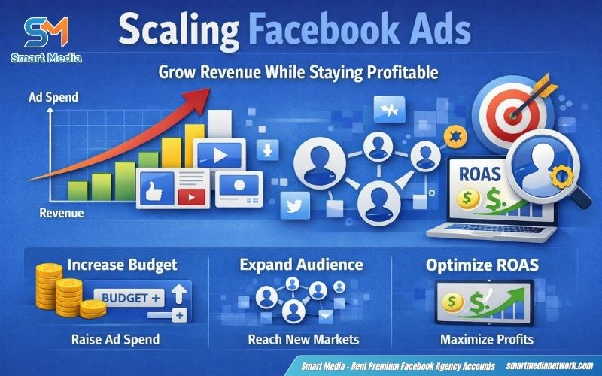
Scaling Facebook Ads is increasing spend to grow revenue while maintaining a profitable ROAS
In 2026, a successful Facebook Ads scaling strategy requires more than just a higher spend; it demands a deep understanding of how to feed the algorithm with high-quality data. Whether you choose to increase Facebook Ad budget settings on a single campaign using Facebook campaign budget optimization or launch your winning creatives into new markets, the goal is always to scale Facebook Ads profitably without causing costs to skyrocket.
When Should You Start Scaling Facebook Ads?
Before you attempt to scale Facebook Ads, you must ensure your campaigns have a foundation strong enough to handle increased pressure. Scaling a shaky ad set is the fastest way to drain your budget without seeing a return. To scale Facebook Ads safely and avoid issues like facebook ad account restricted, follow these critical criteria:
- Scale only when campaigns are stable: Ensure your Cost Per Acquisition (CPA) has remained consistent for at least 7 consecutive days to avoid volatility.
- Scale based on real ROI: Verify that your backend sales and net profit justify scaling Facebook Ads profitably, rather than relying solely on vanity metrics like click-through rates.
- Ensure ad sets have enough conversion volume: Meta’s machine learning requires roughly 50 conversions per week to exit the "Learning Phase" and stabilize performance.
- Monitor data before increasing budget: Always check for creative fatigue and high frequency scores to ensure your audience is still responding positively before you increase Facebook Ad budget levels.
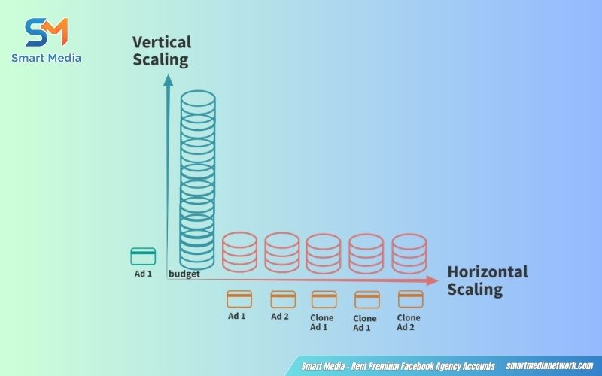
Only scale Facebook Ads profitably after your CPA stabilizes and the learning phase is complete
How to Scale Facebook Ads in 2026: 5 Proven Strategies
Use Lookalike Audiences to scale revenue
Lookalike Audiences remain one of the most powerful ways to expand reach while maintaining conversion quality. Instead of immediately jumping to larger audience percentages, start with 1% based on high-value customers, then gradually test 2–3% and 5% tiers.
Value-based Lookalikes, built from high-LTV buyers, often outperform standard purchaser lists. This phased expansion allows you to scale Facebook Ads without sacrificing ROAS and supports a sustainable growth curve.
Scale with CBO vs ABO strategically
Budget structure plays a major role in any effective Facebook Ads scaling strategy.
- Use ABO (Ad Set Budget Optimization) when testing and during early vertical scaling. It gives you tighter control over spend allocation.
- Use CBO (Campaign Budget Optimization) once multiple ad sets are proven winners. Meta’s AI will allocate budget dynamically to the best performer.
When you increase Facebook Ad budget, follow controlled increments to avoid instability in delivery and performance drops when trying to increase facebook ads budget too aggressively.
- Raise budgets by 15–30% every 48–72 hours
- Avoid doubling budgets overnight
- Scale during stable performance windows
>>Explore: CBO vs ABO: Which Budget Strategy Should You Use in 2026?
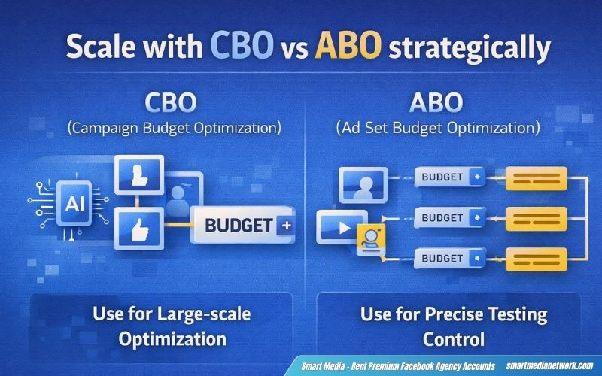
Use CBO for high-volume scaling Facebook Ads profitably and ABO for precise testing control
Expand Saved Audiences
Audience saturation often limits growth. If frequency rises too quickly, CPA increases and performance declines. To continue scaling, broaden your Saved Audiences strategically by relaxing overly narrow interest stacks, expanding age ranges, and testing wider placements.
In 2026, Meta’s system performs better with larger audience pools, so gradual expansion helps maintain stability while increasing volume. This method is essential if you want to understand how to scale Facebook Ads profitably at higher spend levels.
Scale with Ancillary Audiences
Ancillary audiences include adjacent buyer segments who share behavioral similarities with your core customers. These may include complementary product interests, related industry topics, or behavioral categories like frequent online shoppers.
By diversifying targeting pools, you reduce reliance on a single high-performing audience. This horizontal expansion strengthens account stability and allows you to scale Facebook Ads more sustainably over time.
Retarget Potential Customers
Retargeting stabilizes revenue during scaling because it captures warm intent traffic generated by prospecting campaigns. Recommended retargeting layers:
-
7–14 day website visitors
-
Add-to-cart but no purchase
-
30-day engaged users
-
50%+ video viewers
As budget increases, refresh creatives frequently to prevent fatigue. Strong engagement signals also help scale Facebook Ads without ban, because high-quality interaction improves overall account health and trust.
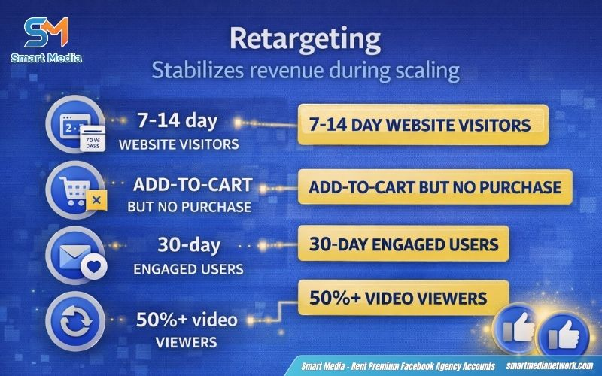
As you increase Facebook Ad budget for cold traffic, scale retargeting to capture users who didn't buy
>>Discover now: How to Target the Right Audience on Facebook Ads in 2026
Use Broad (Demographic-Only) Targeting
One of the most significant shifts in how to scale Facebook Ads in 2026 is the effectiveness of broad targeting. Instead of stacking detailed interests, many advertisers now rely on demographic-only filters or even fully open targeting, allowing Meta’s AI to find the right users.
Broad targeting works best when the pixel has sufficient data and creatives clearly communicate the offer. Brands with stable history and clean compliance with facebook ads policy are better positioned to scale efficiently using Meta’s algorithm.
Common Mistakes When Scaling Facebook Ads
Even the most successful campaigns can collapse if the expansion process is handled recklessly. Many advertisers fail because they treat how to scale Facebook Ads as a simple matter of increasing spend, ignoring common facebook ads mistakes that can quickly destroy performance. To scale Facebook Ads profitably, you must avoid these frequent pitfalls:
- Scaling too fast: Increasing your budget by more than 20% within a 24-hour window often resets the algorithm, pushing your ad set back into the "Learning Phase" and spiking your CPA.
- Ignoring Creative Fatigue: High budgets burn through visuals and copy much faster; if you don't refresh your creatives constantly, your Facebook Ads scaling strategy will eventually stall.
- Neglecting Account Health: To scale Facebook Ads without ban, you must closely monitor your Customer Feedback Score and ensure all landing pages strictly adhere to Meta’s evolving 2026 policies.
- Failing to use high-trust assets: Attempting to increase Facebook Ad budget on a new or unverified account often leads to immediate spending limits or flags from the automated security system.
To avoid critical errors when implementing how to scale Facebook Ads in 2026, partner with professionals who understand safe budget expansion and account risk control. Contact Smart Media today to access reliable facebook ads account rental solutions that support safe scaling and long-term growth.
Frequently Asked Questions About Scaling Facebook Ads
Why do Facebook ads stop delivering when scaling?
Facebook ads often stop delivering because budgets are increased too quickly, which resets the learning phase and destabilizes performance. Audience saturation, rising frequency, or weak account trust signals can also interrupt delivery. To maintain stability while applying how to scale Facebook Ads, increase budgets gradually and monitor CPA, ROAS, and conversion trends closely.
Is increasing the budget the only way to scale?
No. Simply increasing spend is only one part of how to scale Facebook Ads profitably. You can also expand audiences, launch new creatives, test new placements, or enter new markets. A balanced Facebook Ads scaling strategy combines vertical budget growth with horizontal audience and creative expansion.
Can a low-trust ad account affect scaling?
Yes. A low-trust account may experience spending limits, delayed approvals, or sudden delivery drops. If you want to scale Facebook Ads with high-trust accounts, maintain consistent billing history, comply with Meta policies, and avoid aggressive account edits. Account stability plays a critical role when trying to scale Facebook Ads safely and sustainably.
To master how to scale Facebook Ads in 2026, you need structured budget control, intelligent audience expansion, strong creative testing, and stable account management. When executed correctly, you can scale Facebook Ads profitably, maintain performance consistency, and grow revenue without risking account restrictions. If you want expert support to scale Facebook Ads safely and build a long-term growth system, SmartMedia is ready to help. Contact SmartMedia today to develop a high-performance, secure scaling strategy that protects your ad account while maximizing results.
Contact information:
- Telegram: https://t.me/facebook_account_rent
- Discussion group: https://t.me/social_media_account
- Email: [email protected]
Об авторе
SmartMedia Editorial
Performance Marketing
SmartMedia Editorial — часть команды SmartMedia (Performance Marketing), которая помогает рекламодателям масштабироваться благодаря стабильной инфраструктуре и работе в рамках правил платформы.